 Open 7:30 AM – 5:00 PM MON-FRI
 Located in the Montavilla Neighborhood 707 SE 82ND AVE. PORTLAND, OR 97216
 503-254-7310
You start the Jetta on SE 82nd, set the dial to red, and wait. Ten minutes later the glass is still fogged and the vents are still pushing cool air at your hands. That isn’t the weather being stubborn. Something in the car has stopped doing its job.
Weak cabin heat in a Volkswagen is a coolant problem nine times out of ten, and October is when Portland drivers finally notice. A & P Specialties has worked on Audi, Porsche and Volkswagen since 1985, and this complaint fills the schedule every autumn. Sort it now and it’s a routine appointment. Cheap, even. Leave it until the first hard frost and the defroster becomes a safety issue rather than a comfort one.
Quick Summary: Key Takeaways
- Cold vents with a normal temperature gauge: the engine is fine and the problem sits between the cylinder head and your dash.
- Coolant level comes first: a car a quart low will heat on the highway and go cold at a red light on 82nd.
- A clogged heater core is the classic cause: after twelve years, sludge chokes passages narrower than a pencil lead.
- Damp passenger carpet changes the urgency: that’s a leaking core, and ethylene glycol is toxic to pets.
- October is the window: Portland’s first freezing night normally holds off until mid-November.
Cabin Heat Is Borrowed From the Engine, Not Made by the Blower
Your heat comes from the cooling system. Coolant leaves the cylinder head at roughly 195 degrees, runs forward into a small radiator behind the dash called the heater core, and the blower pushes cabin air across it. Lose coolant and you lose heat, because there’s nothing hot left to pass through.
Level first, parts later. A 2.0T running a quart low will make decent heat at 60 mph on I-84 and go stone cold idling at a light, and that pattern alone tells a technician where to look. Trapped air does the same thing. Bleed the system properly and a good share of these cars are finished on the spot.
A Blocked Heater Core Is the Most Common Cause on Older Volkswagens
Give it twelve years and the core plugs up. Slowly, then all at once. Rust, casting sand and the brown sludge that old or mixed coolant leaves behind settle into passages narrower than a pencil lead, and once flow drops far enough the vents blow room temperature no matter where the dial sits.
The tell is a temperature split at the firewall. One heater hose hot, the other barely warm. That’s a restriction, and on a Golf, Jetta, Tiguan or Passat it often means the core comes out — a dash-out job on some models, which is exactly why the diagnosis has to be right before anyone orders a part.
A Sweet Smell and Damp Carpet Mean the Core Is Leaking
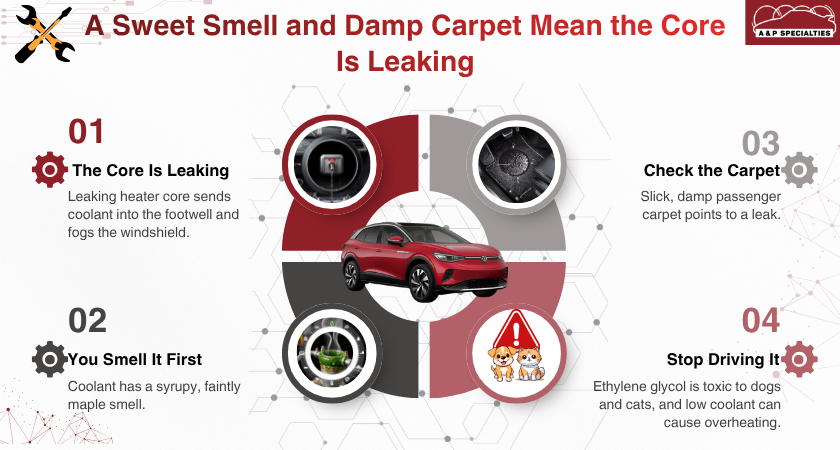
A leaking heater core empties coolant into the passenger footwell and fogs the inside of the windshield with an oily film that wipers can’t touch. You smell it before you see it — that syrupy, faintly maple smell.
Put your hand on the passenger carpet. Slick and damp is your answer. Stop driving it that way: ethylene glycol tastes sweet and is toxic to dogs and cats, and a car quietly emptying its coolant into the carpet is a car that will overheat on the way to work.
Portland’s Cold Season Arrives Later Than Most Drivers Plan For
October is the warning shot. By NOAA’s 1991 to 2020 climate normals, Portland International averages a 64-degree high and a 47-degree low in October, and the first 32-degree night doesn’t normally show up until November 19.
That gap is the whole argument for booking now. You get a few weeks of mild mornings to deal with a heater at your convenience instead of six weeks from now, when the defroster matters and every shop on the east side is a week out. Shoulder-season work is cheaper and calmer. Take the easy version.
A Plugged Cabin Filter Imitates a Heater Fault
Sometimes the heat is fine and the airflow isn’t. Fir needles and a summer of pollen pack a cabin filter solid by autumn, and low volume through the vents reads as cold air even with the coolant at full temperature.
It’s a ten-minute check and the cheapest item on this list, so we look there early. Blend-door actuators fail too, usually with a soft clicking behind the glovebox and heat on one side of the car only. Different part, different bill, same complaint from the driver’s seat. We check the cheap one first because it’s the honest order to check things in, and because a filter costs less than an hour of anybody’s diagnostic time.
Frequently Asked Questions
Q: Why is my VW blowing cold air when the heat is on?
A: Low coolant, air trapped in the system, or a heater core that’s clogged or leaking. If the engine temperature gauge reads normal and the vents stay cool, the fault is downstream of the engine — which is good news, because the engine itself is fine.
Q: How much does a Volkswagen heater core replacement cost?
A: It swings widely by model, because some cores come out from under the hood and others require the dash to be removed. We diagnose first and quote the actual job rather than publishing a number that won’t match your car.
Q: Can you drive with a leaking heater core?
A: Not for long. You’re losing coolant every mile, the windshield films over from the inside, and the same leak that soaks the carpet can leave you overheating in traffic. Get it looked at the week you notice it.
Q: Why does my VW smell sweet inside the cabin?
A: That smell is ethylene glycol, the main ingredient in coolant, evaporating off a warm heater core. A sweet interior smell with fogging glass is close to a confirmed heater core leak.
Book It While the Mornings Are Still Mild
Tell us what the car does and when it does it. Cold at idle but warm on the highway, or cold everywhere? That one answer decides what gets tested first, and it saves you diagnostic time.
A & P Specialties, 707 SE 82nd Ave, Portland, OR 97216. Open Monday through Friday, 7:30 AM to 5:00 PM. Repairs carry a written parts-and-labor warranty, loaner cars are available by appointment, and you can find us online at aandpspecialties.com.