 Open 7:30 AM – 5:00 PM MON-FRI
 Located in the Montavilla Neighborhood 707 SE 82ND AVE. PORTLAND, OR 97216
 503-254-7310
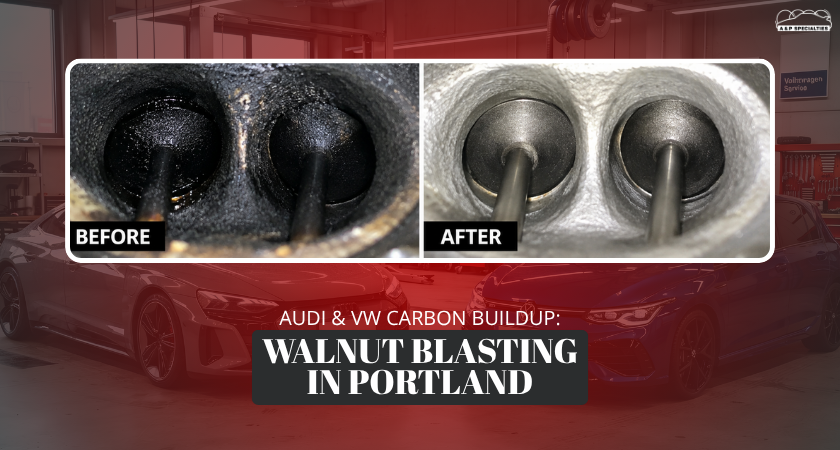
Your 2013 Audi A4 stumbles at the light. Cold starts sound rough, fuel economy slipped, and the check engine light flickers on a hard pull up the West Hills. On a direct-injection engine, that usually means carbon.
Audi and VW fire fuel straight into the cylinder on their TFSI and FSI motors, which keeps gasoline off the back of the intake valves where a detergent could scrub them clean. Gasoline direct injection now powers well over half of new U.S. vehicles, according to the EPA. At A & P Specialties on SE 82nd Ave, walnut blasting is how we get those valves clean again.
Quick Summary: Key Takeaways
- Carbon is a direct-injection problem: TFSI and FSI engines fire fuel past the intake valves, so deposits build with nothing to wash them.
- Watch the mileage window: most Audi and VW valves need attention between 60,000 and 80,000 miles.
- Tank cleaners won’t help: additives never reach the back of a direct-injection valve; only blasting does.
- Walnut media is safe: crushed shells strip carbon without scratching the valve or seat.
- Catch it early: cleaning at the first symptom beats a burned valve and a $3,000-plus head repair.
Carbon buildup is baked-on gunk on your intake valves
Carbon buildup is a crust of oil vapor and combustion residue that hardens on the intake valves and ports. Direct injection is why it stacks up.
On a port-injected engine, fuel washes over the valve every cycle. Audi and VW went direct years ago, from the 2.0T EA888 to the 3.2 FSI. Great for power and mileage. The trade-off shows up around 60,000 to 80,000 miles, when enough deposits collect to choke airflow and the engine fights for every breath on the freeway. We’ve pulled intakes off Golf GTIs and Q5s with valves half-buried in what looks like burnt coffee grounds.
Rough idle, misfires, and lost power point to carbon
The classic signs are a shaky idle, hesitation under acceleration, and misfire codes like P0300 through P0304. You’ll often burn more fuel too.
Owners notice it first on cold mornings in a Montavilla driveway, when the engine shudders for a few seconds before it finally smooths out and idles clean. A stored P0171 lean code is common. Rough throttle response, a whiff of unburned fuel. The list grows. Left alone, a deposit can crack a valve or foul a coil.
Direct injection and short trips speed up the buildup
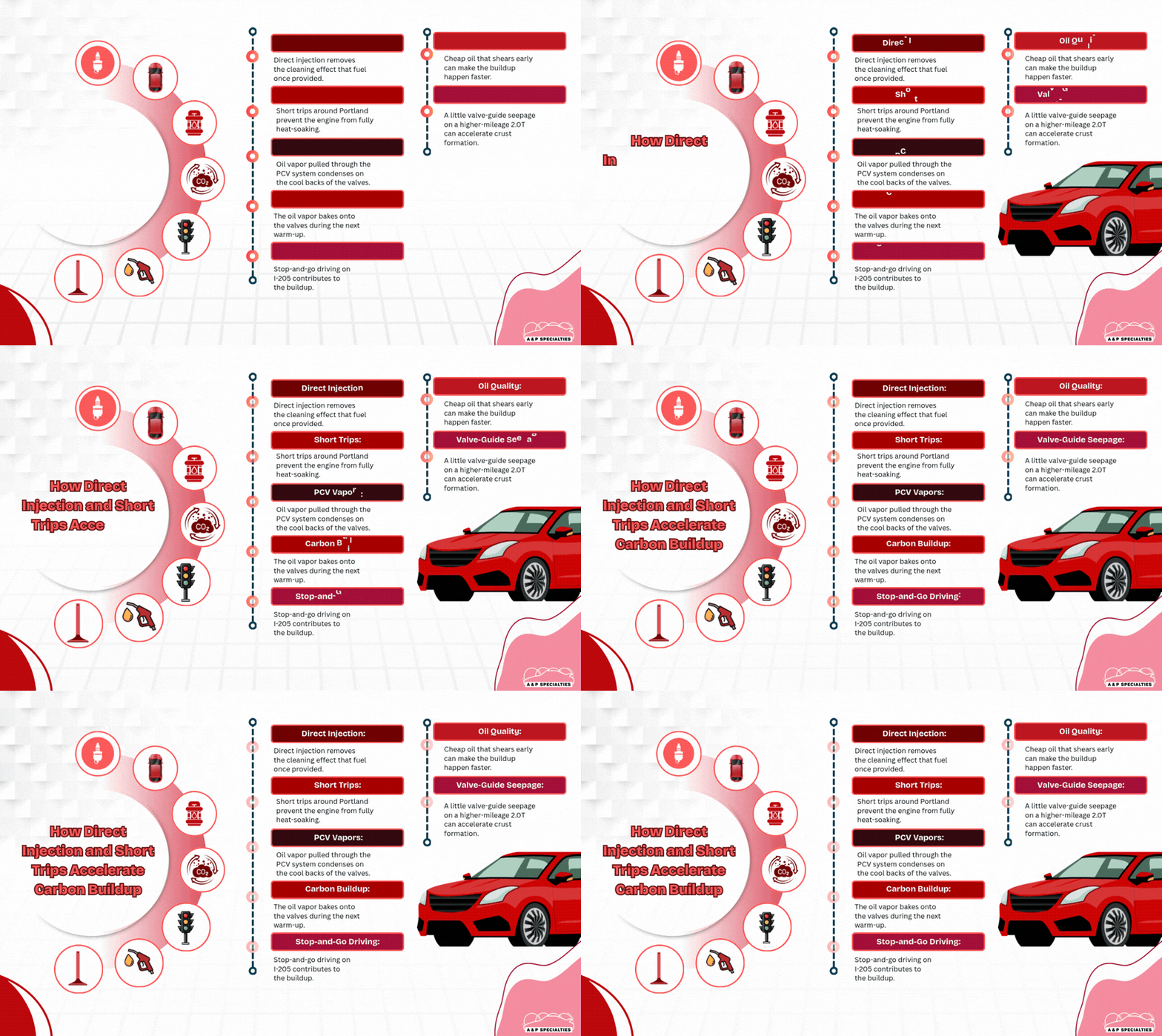
Two things drive carbon: where the injector sprays and how you drive. Direct injection removed the cleaning effect that fuel once had.
Short hops around Portland never let the engine fully heat-soak, so oil vapor pulled through the PCV system condenses on the cool backs of the valves and bakes on with the next warm-up. Stop-and-go on I-205. Cheap oil that shears early. Add a little valve-guide seepage on a higher-mileage 2.0T, and the crust builds faster.
Ignoring carbon costs you power, fuel, and eventually valves
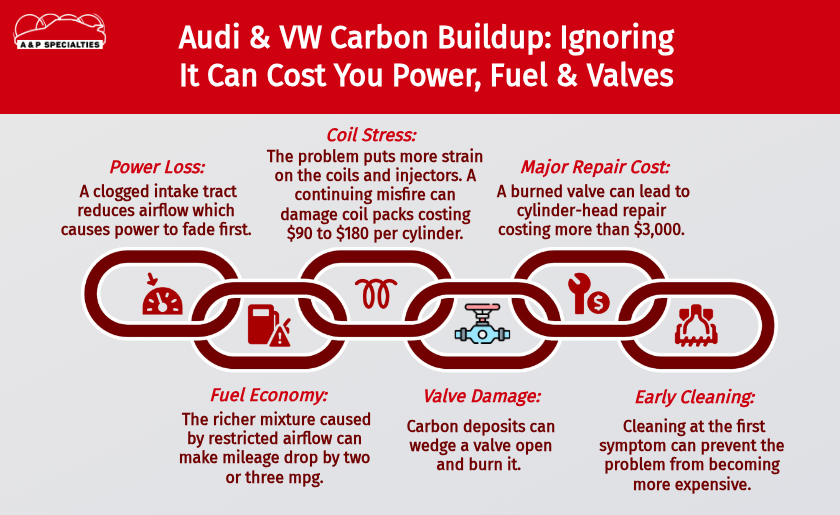
Skip the cleaning and the problem compounds. A clogged intake tract means less air, a richer mixture, and more strain on the coils and injectors.
You’ll feel the power fade first, then watch mileage drop two or three mpg. A misfire that keeps toasting coil packs runs $90 to $180 a hole, and a deposit that wedges a valve open can burn it, pushing you into a cylinder-head repair past $3,000. Cleaning at the first symptom is cheaper. Way cheaper.
Walnut blasting scrubs the valves clean without chemicals
Walnut blasting is the fix that actually works on baked-on carbon. We pull the intake manifold, seal each port, and blast crushed walnut-shell media at the valves.
The crushed shells are hard enough to strip the crust yet soft enough to leave the valve faces and seats unharmed, so you get clean airflow back without tearing into the cylinder head. A shop vac pulls the debris as we go. The idle steadies immediately. Most 2.0T and 3.0T jobs take a few hours, and we pair it with fresh plugs and a PCV check while the intake is off.
A & P has cleaned Portland’s German engines since 1985
A & P Specialties has worked on Audi, Porsche, and VW in Portland since 1985. Founder Alan Blanchard started on Porsches and Audis back in 1972.
Three full-time technicians, factory-level scan tools, and a 36-month, 36,000-mile warranty stand behind every walnut-blasting job we do, and you can reach us easily from Gresham, Happy Valley, Beaverton, or across the river in Vancouver. Loaner cars by appointment. RepairPal and BOSCH certified. We’ll show you the before-and-after photos of your own valves.
Frequently Asked Questions
Q: How much does walnut blasting cost for an Audi or VW?
A: Most 2.0T and 3.0T walnut-blasting jobs land in the mid-hundreds, depending on how buried the valves are and whether you add plugs. We quote after we scope the port condition. It’s a fraction of a valve or head repair.
Q: How often do direct-injection engines need carbon cleaning?
A: Plan on it every 60,000 to 80,000 miles on most Audi and VW direct-injection motors, sooner if you do lots of short trips. Some engines go longer. We check the intake at the first sign of rough idle.
Q: Can a fuel-system cleaner remove intake valve carbon?
A: No. Bottle-in-the-tank cleaners work downstream of the valves, so they never touch the deposits on a direct-injection intake. Walnut blasting is the only reliable way to clean the valve backs.
Q: What are the signs my VW or Audi has carbon buildup?
A: A rough cold-start idle, hesitation, misfire codes, a lean code like P0171, and a two-to-three mpg drop are the common tells. Bring it in and we’ll scope the intake to confirm.
Book carbon cleaning at A & P Specialties in Portland
Feeling a rough idle or a power drop in your Audi or VW? Get the valves scoped before a misfire turns into a coil or head repair. Schedule online and we’ll take a look.
A & P Specialties — 707 SE 82nd Ave, Portland, OR 97216
Hours: Mon–Fri 7:30 AM – 5:00 PM; Sat–Sun closed
Website: aandpspecialties.com