 Open 7:30 AM – 5:00 PM MON-FRI
 Located in the Montavilla Neighborhood 707 SE 82ND AVE. PORTLAND, OR 97216
 503-254-7310

Engine Repair in Portland
Diagnosis First, Because Guessing With Engines Gets Expensive
Quick Takeaways
- Knock, tick and whine mean different things: the noise tells a technician where to look, so describe it carefully when you call.
- Blue, white or black smoke each mean something different: oil, coolant and fuel in that order.
- Flashing check engine light means stop driving: a steady one usually does not.
- Most “engine problems” are not the engine: sensors, coils, vacuum leaks and crankcase ventilation account for a lot of them.
- Ask for the diagnosis before the price: any quote for major internal work should come with an explanation of what was found and how.
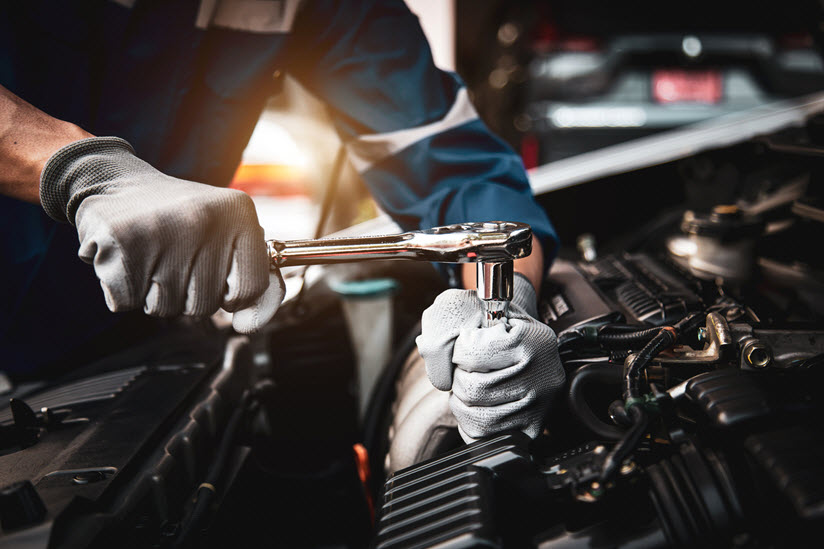
The phrase “engine repair” covers everything from a single sensor to a job that outlives the car’s value, and the only honest way to talk about price is after something has been on a lift. That is not a hedge. It is the reason the first appointment here is a diagnosis rather than a quote. The FTC’s guidance on auto repair tells drivers to get the problem identified in writing before authorizing work, and to ask for the old parts back — both of which are easier to do when the shop has diagnosed the fault instead of guessing at it.
We Service the Following Brands
At A&P Specialties we provide a distinct and wide variety of services for the following brands:

Audi

Porsche

Volkswagen
Describe the Noise and You Have Done Half the Diagnosis
Sound is data. Rhythmic knocking that rises with engine speed points at the bottom end. Lighter ticking that follows engine speed at half the rate is usually valvetrain or an injector. Whining that changes with road speed rather than engine speed is not the engine at all. Two seconds of rattle on cold start, then silence, points at a tensioner losing oil pressure overnight — which on some Audi engines is the early warning worth acting on rather than living with. Tell us when it happens, not just that it does.
→ fuel system service and injector testing
Oil Leaks Announce Themselves by Smell Before Sight
Modern German engines rarely start by dripping. Oil weeps from a gasket onto a hot exhaust component, burns off, and you get a hot, acrid smell at a stoplight for weeks before anything appears on your driveway. If the smell is sweet rather than sharp, you are looking at coolant, not oil. It starts at a gasket or a seal far more often than anywhere internal. Left alone, that oil eventually finds a wiring loom or a rubber belt, and a straightforward gasket job turns into a much longer parts list.
Crankcase Pressure Causes Leaks People Blame on Gaskets
Here is the one that gets missed. The PCV system vents pressure out of the crankcase, and when that valve gums up — which they do, gradually, with age — pressure builds instead of venting. That pressure then pushes oil past seals that were perfectly fine. Replace the gasket without fixing the ventilation and you will be back. On these three marques the crankcase ventilation is rarely a standalone screw-in valve any more. It is often built into the valve cover or a sealed separator module, replaced as an assembly rather than as a part, which is exactly why the diagnosis matters more than the part number.
Timing Components Are the One Job Not to Defer
Belt-driven camshafts come with a replacement figure in the manual, generally somewhere in the 60,000-to-100,000-mile band. Missing it does not strand you. It bends valves. On chain-driven engines the equivalent warning is that cold-start rattle. Neither is a “watch it for a while” item. Both are cheaper by an order of magnitude done on schedule than done after the fact.
When Repair Stops Being the Right Answer
Sometimes it does, and you should hear that from the shop rather than work it out later. If the repair cost approaches what the car is worth, or the same system has come back three times, the conversation should be about whether to keep going — and Alan has been having that conversation with Portland customers since 1985. What you should not accept is a quote for major internal work without a diagnosis that explains why.
Frequently Asked Questions
What are the signs my engine needs repair?
A check engine light, knocking or ticking noises, loss of power or stalling, smoke from the exhaust, high temperature readings, poor fuel economy, or a car that has become hard to start.
Can I keep driving with an engine problem?
It depends on the fault, but assume not. Flashing check engine lights in particular mean an active misfire that can damage the catalytic converter, and continuing makes the repair larger.
What does the color of exhaust smoke tell you?
Blue generally means oil is being burned, white means coolant is entering the combustion chamber, and black means the engine is running rich. Each points at a different repair.
How much does engine repair cost?
It depends entirely on the fault, which is why the first step is diagnosis. You get the cause and the estimate before any work is authorized.
My engine light is on but the car drives fine. Is it urgent?
A steady light is not an emergency, but it is not nothing either — a fault code has been stored and the car may be running on a compensating strategy. Get it scanned before the next service rather than after the next symptom.
Book an Engine Diagnosis in Portland
No quote goes out before the cause is known. A & P Specialties is at 707 SE 82nd Ave in Portland’s Montavilla neighborhood — ASE Certified technicians, a RepairPal Certified shop — serving Audi, Porsche and Volkswagen drivers in