 Open 7:30 AM – 5:00 PM MON-FRI
 Located in the Montavilla Neighborhood 707 SE 82ND AVE. PORTLAND, OR 97216
 503-254-7310
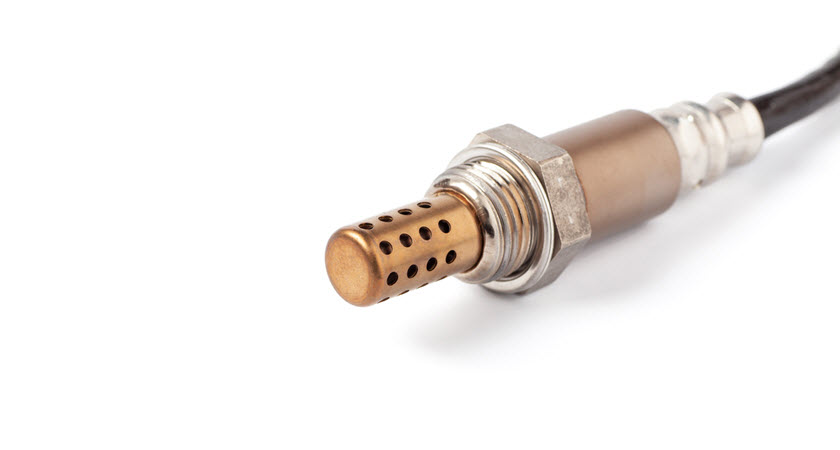
The Porsche brand, well recognized for its performance, is one of the world’s all-time best-selling sports cars. One thing a sports car of this caliber will always demand is engine components that are in top condition to operate at full potential.
An O2 sensor is one of those parts that needs to be operated and send feedback to your Porsche’s computer system to make the right adjustment to make your car perform like it should. Here we will discuss Porsche’s O2 sensors, what they do, and signs you are having problems with your car’s O2 sensors.
Purpose of an O2 Sensor
The O2 sensors on your Porsche serve a couple of purposes. Many Porsches have two O2 sensors, while some models are equipped with up to four, depending on how many catalytic converters are on the car. Either way, the purpose of the O2 sensors remains the same.
O2 sensors are designed for two things. One found in-line prior to your catalytic converter measures the richness of your car’s oxygen and fuel mixture. If the mixture is rich (too much fuel), the car’s computer reduces the fuel. If the mixture is lean (too much oxygen), the computer will add fuel to the mix. The purpose of this is to keep your Porsche running as efficiently and performing at a high standard.
Next, we look at any O2 sensors located after the catalytic converter. The purpose of this sensor is to make sure you are not allowing harmful fumes into the environment, and it will cause the car’s computer system to make fuel adjustments to keep the mixture just right for the environmental setting of the car.
Signs of a Bad O2 Sensor
Now that we know what O2 sensors on your Porsche provide, it is time to take a look at some of the signs that you are experiencing issues with the sensors. Here are a few examples of problems you may run into.
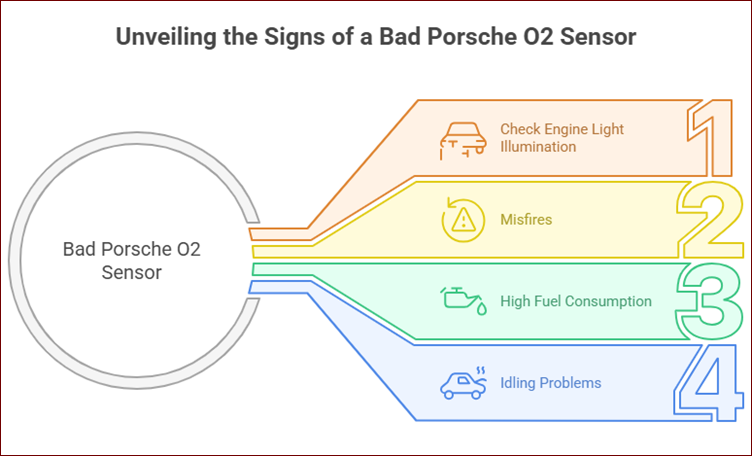
- Check engine light illumination is one of the most common triggers if there is an issue with one or both of your O2 sensors. If the computer of your car is not receiving information or the wrong information from your sensors, it will usually trigger a warning light.
- Misfires are one of the major symptoms of a failing O2 sensor, and is more than likely what will cause a check engine light first. If your car has a jerking sensation when trying to accelerate, then you could very well be having an O2 failure.
- High fuel consumption can occur if you find you are having O2 sensor issues with your Porsche. This is due to the O2 sensor falsely reading that your Porsche is not receiving enough fuel. This will trigger more fuel into the system, and you will certainly not get the gas mileage you were used to.
- Idling problems will occur after starting your car with O2 sensor issues. While the computer is trying to read what is needed, a bad O2 sensor will send mixed messages to your Porsche’s computer. This will cause the system to send too much fuel and then try to adjust to less fuel in a short time period. This will cause a rough idle on your car while it is idling in place.
When to Replace an O2 Sensor
Anytime a check engine light is indicated for a malfunctioning O2 sensor, we need to look at having it replaced. The price comparison of the O2 sensor to what damage can be caused if we let it completely fail is not worth the wait to replace it.
With that said, the best time to change your Porsche’s O2 sensor is at the proper recommended time by the manufacturer’s preventative maintenance plan. By keeping your Porsche servicing up to date, you will more than likely have the O2 sensor replaced long before having any issues with it.

Where to Replace Your O2 Sensor
For Porsche owners in the Portland, Oregon area,  you can trust A & P Specialties to handle all of your Porsche’s needs. Our European expert auto technicians are trained in the latest models, processes, and training to keep your car at a top-performing level. Contact us today to have our Porsche serviced or repaired.