 Open 7:30 AM – 5:00 PM MON-FRI
 Located in the Montavilla Neighborhood 707 SE 82ND AVE. PORTLAND, OR 97216
 503-254-7310
Cooling System Repair in Portland
Coolant Is a Chemistry Problem Before It Is a Plumbing One
Quick Takeaways
- Cooling faults are what strand people: they are also among the most preventable things on the car.
- Coolant is not one product: different manufacturers specify different anti-freeze families, and mixing them causes corrosion rather than protection.
- A stuck-open thermostat is quiet and expensive: the car never overheats, it just never warms up, and your fuel economy pays for it.
- Slow loss with no puddle means pressure-test, not top-up: small leaks evaporate off hot parts before they ever reach the ground.
- Stopping early is the whole game: an engine that overheats and gets shut off is usually repairable; one that gets driven through it usually is not.
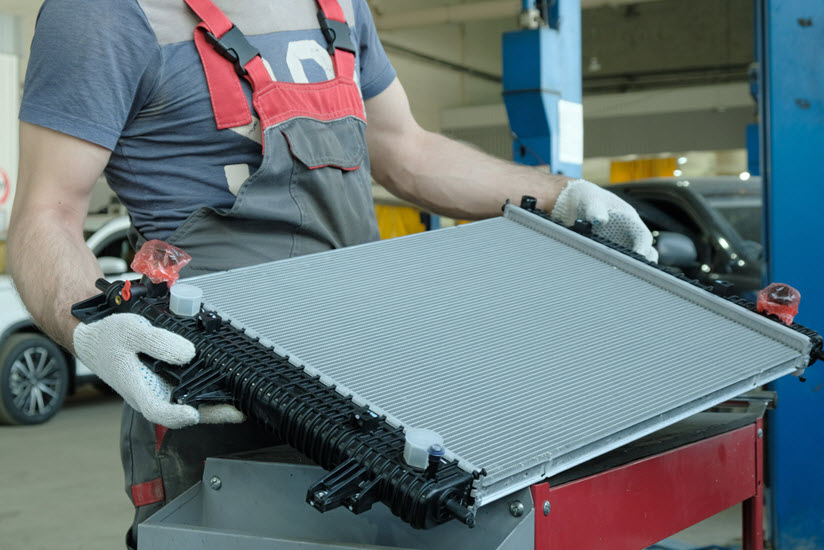
Coolant lives a miserable life. It runs hot, it runs under pressure, it is chemically aggressive by design, and it has to protect steel, aluminum, plastic and rubber from corrosion all at once, in the same loop, for years. That is why manufacturers specify different anti-freeze families rather than one universal product — and why topping up a Volkswagen with whatever is on the shelf at a parts store is a decision that shows up later as a corroded heater core. Get the chemistry right and most of this system is genuinely durable.
We Service the Following Brands
At A&P Specialties we provide a distinct and wide variety of services for the following brands:
Audi

Porsche

Volkswagen
A Thermostat That Never Closes Costs You Money Silently
Everyone worries about overheating. The more common fault, and the one nobody notices, is the opposite: a thermostat stuck open, so the engine never reaches its proper operating temperature. The car runs, the heater is weak, nothing lights up. A cold engine is an inefficient one, which the federal cold-weather figures put a number on: city fuel economy runs roughly 15% lower at 20°F than at 77°F, and as much as 24% worse on short three-to-four-mile trips. Those figures are about winter driving rather than a faulty thermostat — but the mechanism underneath is the same one, and a thermostat stuck open keeps the engine at the wrong end of it all year.
The Water Pump Is the Part Worth Doing Early
A water pump is not on a replacement schedule. It is on an inspection schedule, and there is a difference. Pumps wear — the seal weeps, the bearing develops play — and they give warning if someone is looking. The reason to catch it early is labor. On a belt-driven engine the pump sits behind the same covers as the timing belt, so anything done back there is mostly access time — worth asking how the two jobs line up on your car before booking either one on its own.
Small Leaks Evaporate Before They Reach Your Driveway
This is the single most misread symptom in the system. The coolant level drops a little every few weeks, the warning flickers and clears, and there is nothing on the concrete where the car parks. That does not mean there is no leak — it means the leak is landing on something hot and boiling off. A cold pressure test puts the system under load and shows you the hose joint, the housing crack or the tank seam that is doing it.
What to Do the Moment the Gauge Climbs
Pull over. That is the whole answer, and it is worth being blunt about, because the instinct is to push on to somewhere convenient and that instinct is what turns a hose into a head gasket. Shut the engine off, let it cool, and do not open a hot expansion tank. If the temperature climbs in traffic on I-84 but settles once you are moving, that points at a fan or airflow fault rather than coolant volume — a useful distinction to mention when you call.
Air in the System Is as Bad as No Coolant
Refilling a cooling system is not pouring coolant into a hole. These engines trap air, and a pocket of it sitting against the thermostat or high in the heater circuit behaves exactly like a low coolant level — hot spots, a gauge that swings, a heater that goes cold at idle and comes back at speed. So the system gets bled properly, with the car level and the bleed points opened in order, and then pressure-checked again once it has been through a full heat cycle. Rush that step and the car comes back.
Frequently Asked Questions
How do I know if my cooling system needs service?
Coolant level dropping between visits, a sweet smell after shutdown, a heater that has gone lukewarm, or a temperature gauge that behaves differently in traffic than at speed. Any one of those is worth a pressure test.
Can I just add water to my coolant?
Only in an emergency, and only enough to get somewhere safe. Water dilutes the corrosion protection the coolant exists to provide, and the wrong coolant family causes its own damage.
How often should coolant be changed?
It varies by manufacturer and by the coolant family your car uses. We check the condition and the specification against your model rather than applying one interval to every car.
Is it safe to drive with the temperature warning on?
No. An engine that overheats badly once can be repairable; one that gets driven through it usually needs head gasket work. Stop and let it cool.
Why is my Audi or VW losing coolant with no leak on the ground?
The leak is almost certainly there and burning off a hot surface before it drips. Plastic housings and expansion tanks crack with age, and those show up on a cold pressure test.
Book a Cooling System Inspection in Portland
A pressure test costs a fraction of a head gasket. Start there. You will find us at 707 SE 82nd Ave, Portland, in the Montavilla neighborhood — ASE Certified technicians, a RepairPal Certified shop, and Audi, Porsche and Volkswagen drivers coming in from
Say whether the gauge climbs in traffic or at speed — that alone narrows it.